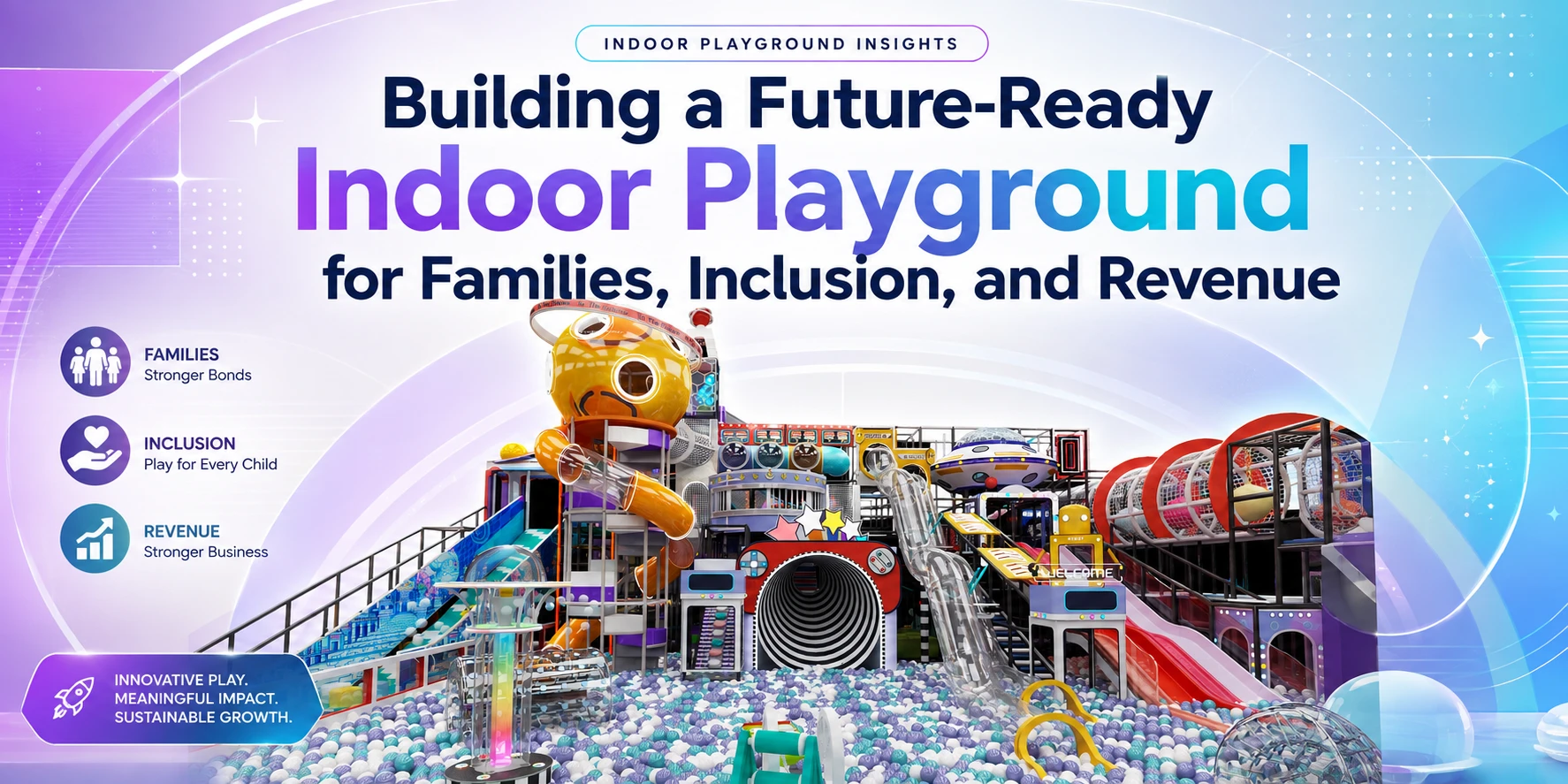
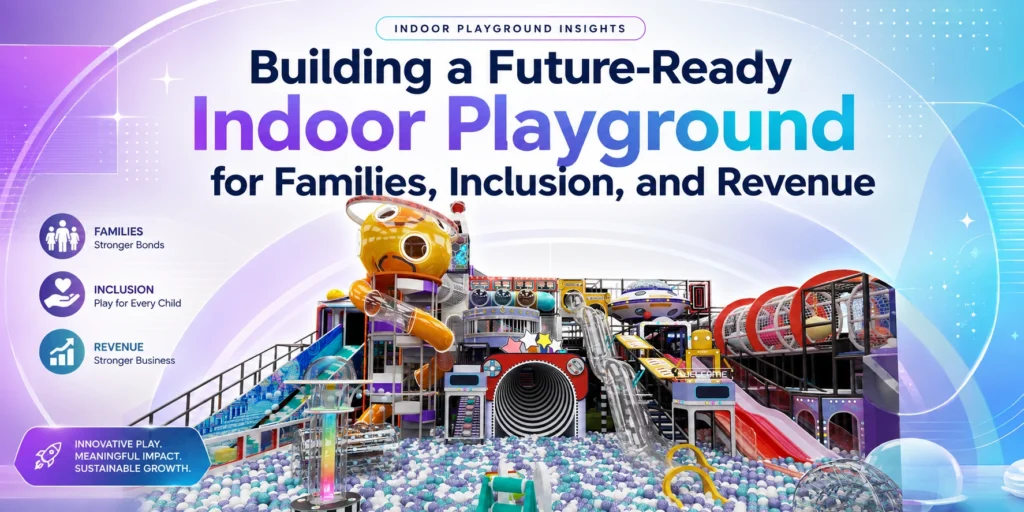
Developers and operators planning an indoor playground must assess what today’s families expect before committing to a build. Get the format wrong and you risk empty sessions, weak party bookings, and a facility that ages poorly. An indoor playground is a climate-controlled commercial play facility designed for children, offering soft play structures, climbing elements, and supervised activity zones. The following sections outline facility types, common attractions, inclusive standards, and revenue models based on evidence from current indoor playground operators.
Indoor Playground Facility Types and Local Market Positioning
Local SERPs typically surface four distinct indoor playground models. Standalone pay-per-play centres compete on open-play value, with all-day admission and drop-in flexibility. Family entertainment centres anchored in retail or malls, such as Go Playland Nanuet, rely on foot traffic from adjoining shopping and dining, so their positioning emphasises convenience and extended dwell time. Non-profit inclusive family centres like Complete Playground differentiate through mission-driven access — sensory-friendly hours and donation-supported admissions — rather than volume. Community-based play spaces such as KidsZone operate as neighbourhood facilities, prioritising local families and repeat visits over destination appeal.
For developers, the benchmark question is which model your catchment supports. Go Playland’s retail placement suits mixed-use footfall; KidsZone’s local positioning favours residential density; Complete Playground proves inclusive programming can anchor a facility without premium pricing. Fold these observations into your commercial playground buying criteria: compare admission structures, party-booked capacity, and mission overhead before committing to a format. Facility format sets the ceiling — attractions and safety policies determine whether you fill it.
What Attractions and Safety Rules Do Leading Facilities Share?
Across facility pages, the standard attraction set repeats with little variation. Most centres install multi-level soft play climbers, slides, ball pits, a dedicated toddler zone, interactive games, and bookable party rooms. This consistency offers a reliable baseline for equipment specification, zoning, and playground lifecycle cost planning.
Safety rules are equally standardised. Visitors must wear socks, adults must supervise children, height and age limits apply to specific zones, and a waiver is signed before entry. Many centres also cap session times. Treat these policies as design inputs, not just signage: they shape staffing ratios, entry flow, and the real playground maintenance cost of high-wear surfaces. Compare your planned rules against operator pages so your facility matches local expectations from day one.
Inclusive Design and Sensory-Friendly Programming as a Differentiator
Inclusive design now separates leading venues from capacity-driven competitors. Treat it as a site-plan input, not an add-on. Accessible play equipment serves neurodivergent and physically disabled children side by side: wheelchair-accessible ramps, ground-level sensory panels, and quiet zones within the layout. Operations matter equally. Sensory-friendly hours with reduced noise, dimmed lighting, and capped attendance create a predictable visiting window for families.
Example callout: Complete Playground, a non-profit inclusive family centre in New York City, positions itself as the city’s largest indoor playground. Its model pairs accessible equipment with sensory-friendly hours and a mission-driven donation structure that funds sliding-scale fees.
That positioning widens your catchment and drives repeat visits. Inclusive layouts also reduce crowding and collision risk, which helps with the playground safety inspection checklist reviewers use. Done well, inclusion supports commercial playground ROI by extending the usable audience — and it primes families for the paid events and bookings that follow.
Admission Models, Party Packages, and Group Event Revenue Streams
Indoor playgrounds monetise access and events through a small set of repeatable streams:
- All-day admission or timed sessions, with sibling and off-peak pricing.
- Tiered birthday party packages bundling play time, party room hire, catering, and supervision.
- Field trip programmes with per-child rates for schools and childcare groups.
- Group event bookings for clubs, scouts, and corporate family days.
Kids Empire Spring Valley and Shenanigans Indoor Playground both publish dedicated pages for birthday parties and field trips, signalling how central these streams are to their operating model. When planning a new facility, benchmark party and group capacity against weekend peak demand. Filling weekday mornings with field trips and weekend slots with parties turns underused hours into predictable income, and party room size often sets the ceiling on that total.
About JQ Playground – commercialplaygroundreview.com
JQ Playground (Wenzhou Jiqi Amusement Equipment Co., Ltd.) is a children’s playground equipment manufacturer founded in 1993. The company provides design, customization, large-scale manufacturing, sales, installation guidance, and after-sales support for outdoor playgrounds, indoor playgrounds, soft play, water playgrounds, PE board playgrounds, kindergarten furniture, outdoor fitness equipment, pet playgrounds, and playground facilities. Approved company facts include 180+ employees, a large Wenzhou production base, 20+ production lines, 55 production machines, ISO/BSCI/EN1176/EN71/ASTM/CPC/CPSIC certification references, 100+ patents, free design support, OEM/ODM capability, trial installation before shipping, export experience, and one-year quality warranty.