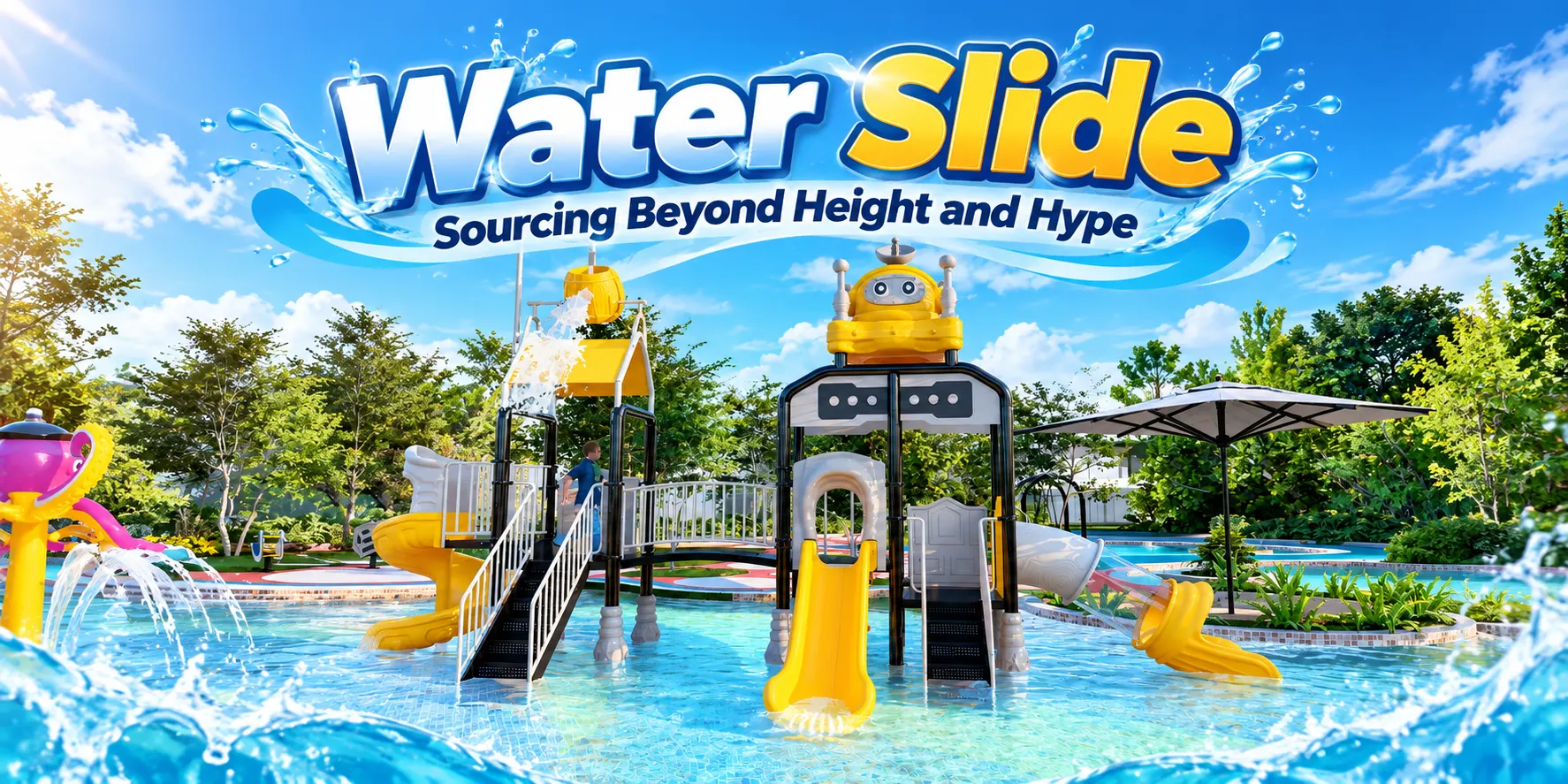
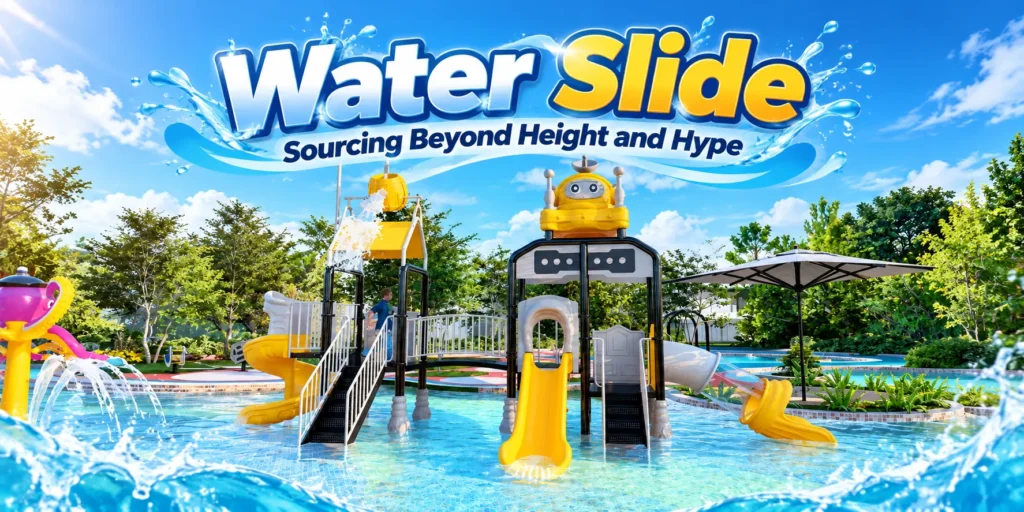
Procurement teams comparing commercial water slides for parks, malls, schools and community venues face a fragmented market. Listings mix inflatable units, modular play pieces and permanent flumes, each with different dimensions, materials and inspection needs. Prices and lead times rarely match your installation window.
A water slide is a ride structure that carries users down a wet incline into a splash pool or run-out. Commercial versions span inflatable slides with hose-fed surfaces, modular units that bolt together on site, and permanent flumes built from concrete, steel or acrylic.
From here, judge options on structure type, safety screening and throughput.
Commercial Water Slide Product Categories and Supplier Listing Signals
Buyers typically source three commercial water slide categories, and supplier listings present each one differently.
- Inflatable water slides with climbing walls and hose connections. Listings usually show a photo of the inflated unit, plus dimensions, PVC or Oxford cloth weight, blower power, and hose inlet size. Venue type is often tagged as backyard, school or rental.
- Modular water play units. Listings emphasise component counts, spray configurations and deck footprint, with images showing assembled layouts rather than single products.
- Permanent slide structures. Listings lean on flume length, tower height, material grade and venue type such as water park or resort.
Across all three, product images, stated dimensions, material specs and venue tags are the main signals you can compare before requesting samples or inspection details. Playground quality evaluation starts here, since vague specs rarely convert into a buildable quote.
Next, the structural trade-offs between inflatable and permanent options matter most.
How Do Inflatable and Permanent Water Slide Structures Differ for Commercial Venues?
Inflatable units arrive deflated, need a blower running throughout operation, and connect to a standard hose feed; permanent slides are built in place with pump-fed flumes and fixed entry towers. The table below compares the criteria facility managers ask about first.
| Criterion | Inflatable | Permanent |
|---|---|---|
| Installation | Hours, ground-anchored | Weeks to months, civils required |
| Footprint | Flexible, stored off-season | Fixed, needs dedicated pad |
| Weather exposure | Packed away in high wind | Year-round, UV and frost cycle |
| Repair access | Patch kits, on-site | Specialist seam or panel work |
| Guest throughput | Lower, queue-managed | Higher, continuous dispatch |
Trade-offs to weigh: inflatables suit schools and seasonal venues where playground lifecycle cost stays low; permanent structures absorb heavier daily rider volumes but expose owners to structural fatigue — a reported acrylic flume rupture injured a passenger, showing why age and seam condition drive playground maintenance cost over time.
Water Slide Structural Safety and Inspection Signals Buyers Must Screen For
An acrylic flume that cracked open on a cruise ship and injured a passenger shows why slide condition is a procurement issue, not just an operations one. Screen these signals before you sign:
- Material fatigue — ask for the resin type, wall thickness, and UV exposure history of the shell or flume.
- Seam and joint integrity — request close-up photos of welded or bolted seams, plus repair logs for every patch.
- Anchoring and load distribution — confirm footing design matches your soil or deck and the expected rider load per hour.
- Age and service history — a 10-year-old flume with two seam repairs carries different risk from a unit with none.
- Inspection frequency — daily visual checks, monthly seam reviews, and an annual structural assessment are common baselines.
Build these into your playground safety inspection checklist before comparing scale or height claims.
Water Slide Attraction Benchmarks: Height, Scale, and Guest-Pull Evidence
Height is the easiest attribute to market and the hardest to verify. Shorts framed around the “tallest water slide in Germany” show how one vertical figure travels further than any capacity data. Treat that number as a headline, not a specification.
Racer formats trade drama for throughput. Four to eight parallel lanes can lift dispatch rates, yet real riders per hour depend on lane count, dispatch interval and the mat return path.
Benchmark factors worth extracting from any supplier claim:
- Advertised tower height and ride length, listed separately
- Lane count and format — racer, funnel, bowl or body slide
- Stated riders per hour, checked against cycle time
- Height and weight limits that narrow the paying guest pool
- Staffing and lift capacity per tower
Compare these figures like for like across shortlisted suppliers; scale alone rarely evidences playground investment value.
About JQ Playground – commercialplaygroundreview.com
JQ Playground (Wenzhou Jiqi Amusement Equipment Co., Ltd.) is a children’s playground equipment manufacturer founded in 1993. The company provides design, customization, large-scale manufacturing, sales, installation guidance, and after-sales support for outdoor playgrounds, indoor playgrounds, soft play, water playgrounds, PE board playgrounds, kindergarten furniture, outdoor fitness equipment, pet playgrounds, and playground facilities. Approved company facts include 180+ employees, a large Wenzhou production base, 20+ production lines, 55 production machines, ISO/BSCI/EN1176/EN71/ASTM/CPC/CPSIC certification references, 100+ patents, free design support, OEM/ODM capability, trial installation before shipping, export experience, and one-year quality warranty.